Turn Your Website Into a Lead Generating Content Engine
Your Website Should Be a Marketing Engine, Not Just an Online Brochure
TL;DR: A modern website should do far more than simply explain who you are and what you offer. It should actively generate leads, fuel search visibility, power social media content, support email marketing, and create ongoing promotional opportunities from the content you already have, including inventory, promotions, events, projects, services, reviews, FAQs, and updates. When built and managed strategically, your website becomes the central source for posts, photos, videos, landing pages, local SEO signals, and syndicated content that extends your reach across multiple channels. Instead of treating your site like a static brochure, treat it like the content engine behind your entire digital marketing strategy.
Many businesses still treat their websites like digital business cards. The site goes live, a few service pages are added, the contact form works, and the assumption is that the online presence is handled. But in today’s competitive digital environment, that approach leaves an enormous amount of growth on the table.
Your website should not be a static destination people happen to visit. It should be an active marketing engine that creates momentum across search, social media, email, paid campaigns, content syndication, and lead generation. It should be the source of truth for your offers, your expertise, your proof of performance, and your latest updates. More importantly, it should continuously produce content that can be transformed and distributed across every major channel where your audience spends time.
When your website is structured correctly, every update on the site can create multiple additional marketing assets. A new product or inventory item can become a social post, a short-form video, a photo carousel, an email feature, a location page update, and a syndicated listing. A seasonal promotion can become a landing page, a series of countdown posts, paid ad creative, a blog post, and a boosted content placement. A completed project can become a case study, before-and-after gallery, testimonial asset, YouTube short, and SEO-rich portfolio page.
That is the difference between a brochure website and a marketing engine. One sits there. The other works for your business every day.
The Problem With Brochure-Style Websites
A brochure-style website usually has the basics: home page, about page, service pages, maybe a gallery, and a contact form. While those pages are still important, they are only the beginning. If the site rarely changes, if there is no system for publishing new content, and if the information is not being repurposed into other formats, the website quickly becomes underutilized.
Static websites tend to create several common problems:
- Search visibility stagnates because there is little fresh, relevant content being added.
- Social media becomes difficult to maintain because there is no steady stream of source material.
- Promotions lose momentum because there are no dedicated landing pages or supporting content assets.
- Sales teams and customer service teams answer the same questions repeatedly because the website is not publishing helpful educational content.
- Marketing efforts feel disconnected because each channel is being treated separately instead of being fueled by a central content source.
In short, a brochure website may look acceptable, but it usually does not perform like a real growth asset. If your goal is to generate awareness, trust, leads, and long-term visibility, your site must evolve into something much more dynamic.
What a Marketing Engine Website Actually Does
A marketing engine website is built to attract, convert, and amplify. It is designed not only for visitors who arrive on the site, but also for every distribution channel that can be supported by what the site publishes.
At a practical level, this means your website should:
- Publish ongoing content that reflects what is happening in your business right now.
- Turn business activity into searchable assets.
- Support lead generation with clear calls to action and campaign-specific landing pages.
- Create reusable material for social media, video, email, and paid advertising.
- Provide structured content that can be distributed through syndication networks to increase reach.
- Strengthen your authority in search engines by consistently demonstrating relevance and expertise.
Instead of asking, “Do we have a website?” the better question is, “Is our website producing usable marketing output every week?” If the answer is no, then the opportunity is much bigger than design alone.
Your Existing Website Content Is More Valuable Than You Think
One of the biggest misconceptions in digital marketing is that businesses need to constantly invent brand-new ideas from scratch. In reality, most businesses already have a steady stream of raw material. The challenge is not the lack of content. The challenge is recognizing it, organizing it, and deploying it strategically.
Your website can become the central hub for content based on assets you already have, including:
- Inventory: new arrivals, featured products, limited availability, seasonal highlights, top sellers, specialty items.
- Promotions: discounts, bundles, flash sales, special financing, limited-time offers, holiday campaigns.
- Events: in-store events, webinars, open houses, launches, trade show appearances, community involvement.
- Projects: completed jobs, installations, transformations, client results, case studies, before-and-after stories.
- Services: service explanations, process pages, FAQs, package comparisons, benefits-focused educational content.
- Testimonials and reviews: social proof, quote graphics, reputation content, trust-building website sections.
- Team knowledge: tips, advice, expert insights, common mistakes, buyer education, how-to guidance.
- Frequently asked questions: useful information for both customer support and SEO.
Each of these categories can serve as the seed for multiple content formats. Once your website becomes the place where these updates live first, it becomes much easier to create a consistent and efficient multi-channel marketing workflow.
One Website Update Can Become Dozens of Marketing Assets
One of the most important shifts in modern content strategy is understanding content multiplication. A single website update should not live in isolation. It should branch out into multiple formats and placements.
For example, imagine your business publishes a new project on the website. That single project page can become:
- A Facebook post highlighting the result.
- An Instagram carousel featuring before, during, and after photos.
- A short-form video for Instagram Reels, Facebook Reels, TikTok, or YouTube Shorts.
- A LinkedIn post emphasizing professionalism, process, and outcomes.
- A blog post focused on the challenge, approach, and solution.
- An email newsletter feature.
- A testimonial graphic pulled from the customer feedback attached to the project.
- A portfolio update that improves on-site conversions.
- A local SEO signal if it references a geographic service area.
- Visual ad creative for retargeting campaigns.
- Content distributed through syndication channels to broaden visibility.
The same principle applies to inventory, special offers, events, blog posts, staff spotlights, service pages, and customer stories. Content does not need to be created once and used once. It should be created once, then adapted repeatedly.
Why the Website Must Come First
Businesses often post directly to social media and treat those platforms as their primary publishing destination. While social channels are valuable for visibility and engagement, they should not be the foundation of your content strategy. Your website should come first because it is the only platform you fully control.
When content starts on your website, several advantages follow:
- You create a permanent, indexable asset that can rank in search.
- You establish a canonical source of truth for offers, services, events, and announcements.
- You can optimize the content for conversions with forms, calls to action, tracking, and lead pathways.
- You can update or expand the content over time.
- You are not dependent on social algorithms to determine whether your audience sees it.
- You can repurpose the content into every other channel with more consistency and less duplication of effort.
Social media posts come and go quickly. Website content keeps working. A post might get attention for a day or two. A properly optimized page can continue generating traffic, leads, and repurposing opportunities for months or years.
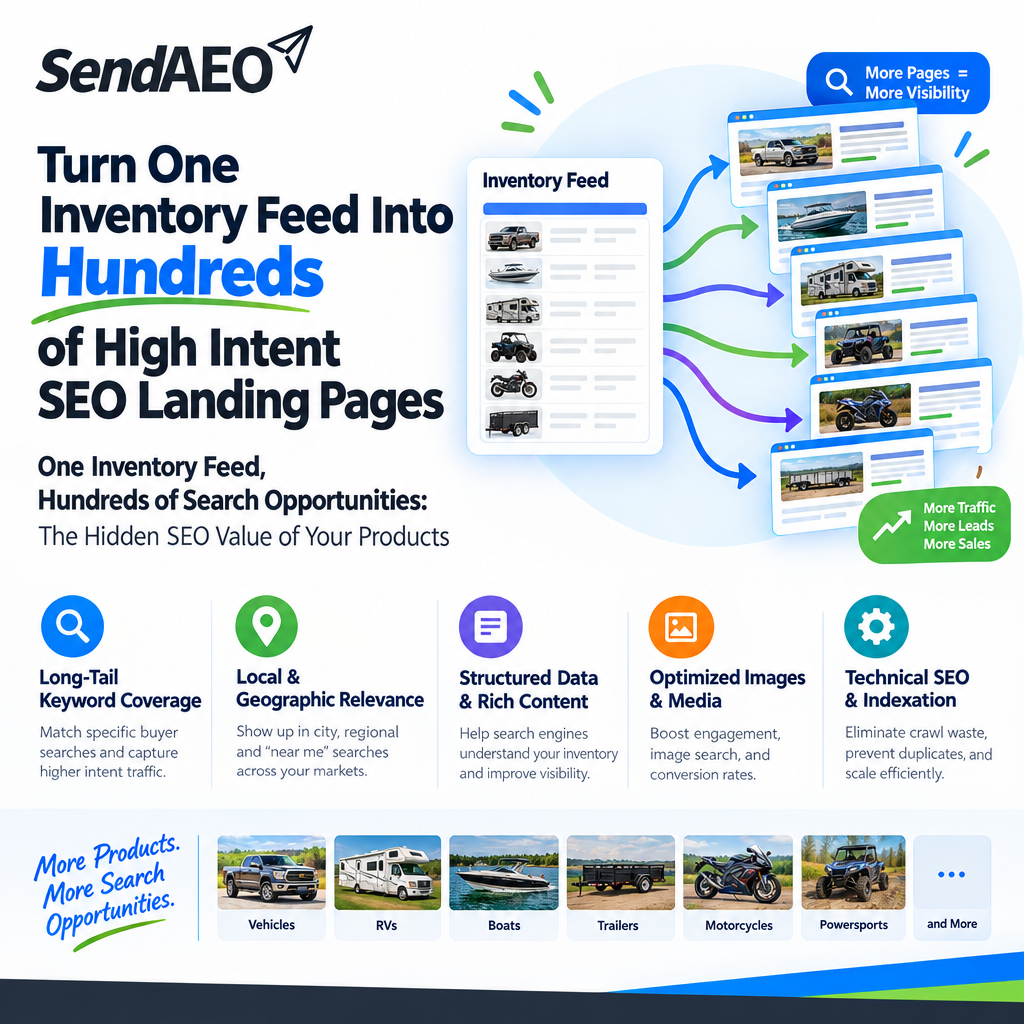
Inventory Content Can Drive Far More Than Product Visibility
If your business manages inventory, your website should be doing much more than listing available items. Inventory is one of the richest and most underused content sources available. Every new item, featured category, restock notice, limited run, or seasonal product line can become marketing fuel.
Strategically published inventory content can support:
- Search engine visibility for product-related terms.
- Social posts featuring top products or themed collections.
- Story content showing arrivals, details, and availability.
- Video walk-throughs or quick showcases.
- Email campaigns highlighting featured items.
- Dynamic ad campaigns and retargeting audiences.
- Urgency-driven campaigns around low stock or limited availability.
- Syndicated distribution that broadens product awareness.
Rather than adding inventory and hoping people find it, the better strategy is to publish inventory in a way that generates momentum across channels. That means thoughtful product descriptions, strong visuals, category organization, schema-aware structure where applicable, and a workflow that allows each update to feed social and promotional content automatically or semi-automatically.
Promotions Should Live on More Than a Banner
Too many businesses run promotions by adding a simple homepage banner and posting a quick social graphic. That approach rarely captures the full opportunity. Every important promotion deserves a dedicated home on the website and a campaign strategy that turns one offer into a series of touchpoints.
A promotion page on your website can become the campaign anchor for:
- Search-optimized landing pages.
- Paid traffic destinations.
- Email announcements and reminders.
- Organic social posts.
- Countdown content and last-chance messaging.
- Retargeting ads.
- Supporting blog content.
- Visual snippets for stories, reels, and short-form video.
- Syndicated promotional distribution where appropriate.
This approach creates consistency. Wherever someone sees the campaign, they are funneled back to a central destination with the full offer details, trust signals, and a clear next step.
Events Create High-Value Content Before, During, and After
Events are not just calendar items. They are content opportunities at every stage. A website-driven event strategy can generate awareness before the event, engagement during it, and evergreen credibility afterward.
Before the event, your website can host the event page, registration details, schedules, speaker or feature highlights, FAQs, and supporting blog content. During the event, it can support live updates, social cross-promotion, and engagement prompts. After the event, the same page can evolve into a recap, gallery, highlight reel, takeaway summary, or proof of community involvement.
From one event, you can build:
- Announcement posts.
- Reminder emails.
- Speaker or participant spotlights.
- Photo galleries.
- Recap videos.
- Testimonial content.
- Press-style content distribution.
- SEO content tied to local or niche relevance.
When event content begins on your website, it becomes easier to preserve the value long after the event has ended.
Projects and Case Studies Build Trust and Fuel Content at the Same Time
Project-based businesses have an especially strong opportunity to transform their websites into content engines. Every completed project is proof of capability, and proof is one of the strongest marketing tools available.
A well-developed project page can include:
- The customer objective or problem.
- The scope of work or deliverables.
- Photos of the process and result.
- Key details about materials, approach, or timeline.
- Relevant service categories.
- Location-based relevance.
- Client feedback or testimonial language.
- A clear call to action for similar work.
From there, that project can be transformed into multiple content pieces across social, video, email, and sales support. Instead of simply saying you do great work, your website continuously demonstrates it.
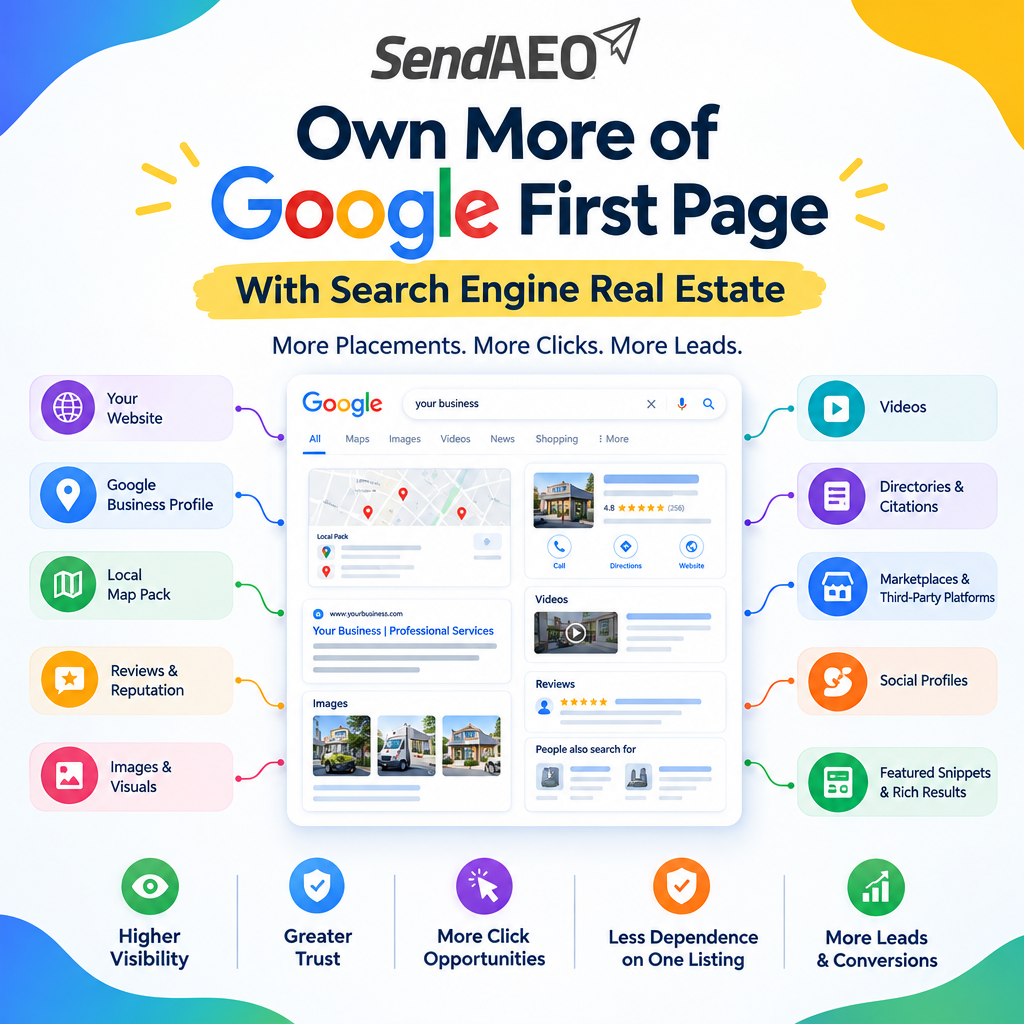
Project content is also highly effective for local SEO because it naturally supports location references, service relevance, and topical authority. Over time, a robust project library can become a major search asset, not just a portfolio.
Website Content Should Be Built for Search and Social at the Same Time
Search engine optimization and social media are often managed separately, but the strongest strategies connect them. A website page that is well-structured for SEO also becomes an excellent source asset for social publishing. Likewise, social content that points back to a useful, relevant page can help drive engagement, traffic, and conversion activity.
For content to support both search and social effectively, it should include:
- Clear topics and keyword-aligned headings.
- Compelling titles and metadata.
- High-quality visuals.
- Useful, audience-focused information.
- Logical internal links to related content.
- Strong calls to action.
- Shareable takeaways or visual moments.
- Freshness and ongoing updates where relevant.
When your website is publishing content that is genuinely useful and strategically structured, it does not just rank better. It also becomes easier to convert into social posts that sound timely, informed, and relevant rather than generic or repetitive.
Short-Form Video Starts With Website Content Too
Short-form video continues to dominate engagement across major platforms, but many businesses struggle to produce it consistently because they assume every video needs a completely original concept. In reality, your website can serve as the script board for short-form content.
A project page can become a quick transformation video. A FAQ page can become a series of expert tip clips. A service page can become an educational explainer. A promotion page can become an offer video. An inventory update can become a product spotlight reel. An event page can become a teaser or recap.
When the website is publishing organized, relevant updates, creating video content becomes easier because the core message already exists. That leads to greater consistency, stronger alignment between channels, and more efficient content production overall.
Content Syndication Extends the Reach of What Your Website Publishes
Publishing content on your website is the first step. Strategic content syndication is one of the most effective ways to expand the visibility of that content beyond your owned channels. Through syndication networks, your business can distribute appropriate content more broadly, helping strengthen awareness, amplify announcements, and place your brand in front of a larger audience.
This matters because even strong website content benefits from additional distribution. Syndication can support:
- Broader exposure for promotional campaigns.
- Additional visibility for business announcements and updates.
- Expanded reach for content that deserves more than a single posting channel.
- Supporting signals that complement your wider digital strategy.
- Greater efficiency by helping one content asset go further.
Used correctly, content syndication does not replace your website, SEO, or social media efforts. It strengthens them. Your website remains the content source, while syndication helps push that content outward to increase discoverability and reach.
The key is to use syndication strategically, with content that is relevant, newsworthy, promotional, or supportive of broader campaign goals. When integrated properly, it becomes another force multiplier for the content your website is already producing.
A Marketing Engine Website Supports the Entire Funnel
A high-performing website does not just generate traffic. It supports the full customer journey. Different types of website content help different audiences move from awareness to action.
For example:
- Top of funnel: blog posts, educational guides, social-driven landing pages, event announcements, community content.
- Middle of funnel: project pages, case studies, comparison content, FAQs, testimonials, in-depth service pages.
- Bottom of funnel: offer pages, contact forms, quote requests, booking pages, consultation pages, inventory detail pages.
When your website is organized around these stages, every content update serves a larger strategic purpose. Some assets attract new audiences. Some build trust. Some convert interested prospects into leads. Together, they create a system rather than a collection of random pages.
Consistency Beats Occasional Bursts of Activity
One of the biggest benefits of a website-as-engine approach is consistency. Businesses often market in bursts: a new promotion here, a rushed social push there, a few updates during a busy season, then long stretches of silence. That pattern makes it difficult to build sustained visibility.
By contrast, a content-driven website creates a repeatable flow. New inventory, projects, events, promotions, tips, and updates are published on-site first. From there, they are adapted into social posts, photos, video clips, email content, and wider distribution opportunities. This process builds a steady rhythm that keeps your brand visible and active without requiring every campaign to start from zero.
Consistency also helps performance measurement. When content is being published and distributed on a routine basis, it becomes easier to identify what drives traffic, engagement, inquiries, and conversions.
What This Looks Like in Practice
Here is what a practical website content engine workflow can look like:
- A new update happens in the business: inventory arrives, a project is completed, an event is scheduled, or a promotion is launched.
- A dedicated page or post is created on the website with optimized copy, visuals, and a clear call to action.
- The website content is categorized and internally linked to strengthen search value and user navigation.
- The core page is adapted into multiple social formats, such as single-image posts, carousels, stories, reels, or shorts.
- Supporting email content is created using the same message.
- Where applicable, ad creative and campaign landing paths are built around the website page.
- Appropriate content is distributed through syndication networks to support additional reach.
- Performance is reviewed, and strong-performing topics are reused, expanded, or updated.
This model allows marketing to become more scalable because content starts from one central source and extends outward strategically.
The ROI of Turning Your Website Into a Content Engine
When your website becomes the core of your marketing ecosystem, the return extends far beyond aesthetics. A content-engine website creates cumulative value over time.
Benefits typically include:
- More indexable content for search engines.
- More opportunities to rank for service, product, and location-based searches.
- More assets to share across social media.
- More trust-building proof for prospective customers.
- More efficient campaign creation.
- More useful data about what topics and offers generate response.
- More value extracted from the everyday activity already happening in your business.
- More reach through structured content distribution and syndication.
Most importantly, it helps ensure your digital marketing efforts are compounding rather than disappearing. Instead of constantly producing one-off posts with short shelf lives, you build a library of content assets that can continue to support growth over time.
Stop Letting Valuable Business Activity Go Unused
Every week, most businesses generate marketable content without realizing it. New work is completed. Products are added. customers ask useful questions. Promotions are planned. Events are discussed. Team expertise is shared. Success stories happen. Yet much of that value never makes it onto the website in a way that can support search, social, email, video, and broader digital reach.
That is the missed opportunity. Your website should be capturing, organizing, and amplifying what is already happening inside your business. When it does, marketing becomes more efficient, more visible, and more sustainable.
If your current site mainly explains who you are but does little else, it may be time to rethink its role. A modern website should not simply exist. It should publish, distribute, convert, and support growth across every major channel.
In other words, your website should not be an online brochure. It should be your marketing engine.
Frequently Asked Questions
What does it mean for a website to be a marketing engine?
It means your website actively supports lead generation, SEO, social media, email campaigns, paid campaigns, and content distribution. Instead of being static, it continuously publishes and repurposes content that helps attract attention and drive business results.
How is a marketing engine website different from a brochure website?
A brochure website mainly presents basic company information and stays relatively unchanged. A marketing engine website is updated regularly with content such as inventory, promotions, projects, events, guides, and landing pages that can be reused across multiple channels.
Why should website content come before social media posting?
Your website is your owned platform. Content published there creates a permanent asset that can rank in search, be updated over time, track conversions, and serve as the source for social posts, videos, emails, and campaign content.
What types of website content can be repurposed into social media posts?
Almost anything useful or timely can be repurposed, including inventory listings, promotions, events, completed projects, testimonials, blog posts, FAQs, service highlights, team spotlights, and educational tips.
Can one piece of website content really become multiple marketing assets?
Yes. A single website page can often become a social post, carousel, short-form video, email feature, ad destination, blog support piece, and syndicated content asset. That is one of the biggest advantages of a website-first strategy.
How do promotions benefit from dedicated website pages?
Dedicated promotion pages provide a central destination for campaign details, improve tracking, create better landing experiences for paid and organic traffic, and give your team a consistent page to promote across all channels.
Why are project pages and case studies so important?
They build trust by showing real results, provide visual proof of quality, support local and service-related SEO, and create highly reusable content for social media, email marketing, and sales follow-up.
What role does content syndication play?
Content syndication helps extend the reach of selected website content through broader distribution channels. It supports brand visibility, campaign amplification, and awareness beyond your owned media platforms.
Does this approach only work for large businesses?
No. Small and midsize businesses often benefit the most because a website-centered content strategy helps them get more value from the marketing materials and day-to-day business activity they already have.
How often should a marketing engine website be updated?
The ideal frequency depends on your business, but regular updates are essential. New inventory, promotions, events, projects, blogs, FAQs, and service content should be added consistently so the site remains active, useful, and aligned with your broader marketing efforts.